Bedding guide
How to Choose a Duvet Cover: Fit, Fabric, and Closure Details
A duvet cover is both the finishing layer of a bed and the practical barrier that keeps an insert clean. The right one fits without crowding, feels inviting through changing seasons, and suits the way you wash and care for your bedding. Start with measurements, then consider fabric, construction, and closures—the details that determine whether a cover is a pleasure to live with or a nightly nuisance.
Begin with the duvet insert, not the size label
“Queen” and “king” are useful starting points, but they are not precise measurements. Bedding dimensions can vary among manufacturers, and an insert described as king may not match every king-size cover. Before choosing, check the insert’s actual width and length, then compare those numbers with the cover’s finished dimensions. A tape measure and a few minutes of checking can prevent a bed that looks lopsided, feels bunched, or leaves too much empty fabric at the edges.
A close, compatible fit allows the duvet to drape neatly while leaving enough room for the insert to settle naturally. If the cover is substantially larger than its insert, the fill can migrate toward the corners or gather in loose pockets. The bed may look rumpled even when freshly made, and the duvet can feel uneven during the night. If the cover is too small, the insert may be compressed, its loft restricted, and the closures placed under unnecessary strain.
There is no universal rule that a duvet cover must be exactly the same size as its insert. Fabric, sewing tolerances, laundering, and the insert’s construction all influence how the finished pairing behaves. Treat the listed measurements as evidence, not decoration: compare them carefully and look for any manufacturer guidance about the intended insert fit.
Measure accurately for a tailored drape
Measure the insert flat, without pulling or compressing it. Record its width and length, and note whether it has a box construction, corner loops, or another feature that affects its shape. Then check the cover’s stated dimensions, paying attention to whether the figures refer to the finished article rather than the fabric before sewing. When measurements are not listed clearly, ask the maker or retailer before purchasing.
Also consider the bed itself. Some people prefer a cover that falls close to the mattress, while others like a generous drop that partly conceals the sides. A wider duvet can create that more enveloping silhouette, but the cover must still be cut to accommodate the insert. Do not assume that selecting a larger cover will create a more luxurious result: excess fabric can compromise both appearance and comfort if the insert does not fill it.
Mattress depth matters most when coordinating the duvet with the rest of the bed. A thick mattress, topper, or layered foundation can change how much of the duvet falls over each side. Think about the finished bed as a whole, but keep the relationship between cover and insert as the first fit decision.
- Measure the insert’s width and length before shopping.
- Compare those measurements with the cover’s actual dimensions, not only its size name.
- Check the construction and placement of corner ties or loops if the insert has matching attachment points.
- Consider the desired drape over the mattress without allowing the cover to outsize its insert substantially.
- Review care instructions for possible changes in fit after washing and drying.
The fabric sets the mood—and the maintenance
Fabric affects more than the first impression of a bed. Fiber and weave shape the surface feel, weight, breathability, drape, and care requirements. The best choice is not necessarily the most expensive or the most talked-about textile; it is the one that suits your temperature preferences, daily routine, and idea of comfort.
Linen: relaxed texture and natural variation
Linen is made from flax and is prized for its breathable character, textured surface, and easy, unstudied drape. Its slightly irregular appearance is part of its appeal: the fabric often has a tactile, lived-in quality rather than the uniform smoothness of a finely finished cotton. Linen can feel cool and airy in warm weather, while its substantial hand may still feel comforting as temperatures shift. The exact experience depends on the fabric’s weight, weave, finish, and the other layers on the bed.
Many linen covers soften with use and laundering, though they may also show creases more readily than smoother fabrics. That is not a flaw; it is a characteristic to embrace if you like a bed that feels composed but not pressed into formality. If you prefer a crisp, immaculate surface, the natural rumple may require more ironing than you want to give it—or may simply not be your preferred look.
Cotton: familiar versatility in several finishes
Cotton offers a broad range of textures, from crisp and matte to smooth and softly lustrous. The weave is as important as the fiber. Percale typically has a clean, crisp hand and a lighter, more structured feel; sateen tends to be smoother, with a subtle sheen and a more fluid drape. Neither is inherently superior. The choice turns on whether you prefer a fresh, cool-to-the-touch surface or a silkier one.
Long-staple cotton is often chosen for its potential to create a smooth, durable yarn, but a fiber description alone does not tell the whole story. Weave, finishing, stitching, and care all contribute to how a cover feels and wears. Thread count can be one point of comparison, but it should not stand in for a complete assessment of quality or comfort.
Other fibers: read the care label closely
Silk, blends, and other specialty fabrics may offer distinctive drape or surface qualities, but they can come with more specific maintenance requirements. Some need delicate washing, mild detergent, air drying, or professional cleaning. If a cover will be used every night, convenience is not a minor consideration. A fabric that feels beautiful but demands a routine you cannot maintain may be less suitable than a washable option that still feels appealing.
Weave, weight, and finish: the details beneath the hand-feel
Two duvet covers made from the same fiber can feel quite different. A plain weave, a satin-based weave, and a twill weave arrange yarns differently, affecting surface character, drape, and the way light meets the cloth. Finishes such as stone washing can soften the hand and relax the appearance; other finishing processes may create a smoother or crisper surface. These terms are helpful, but they are best read alongside the fabric’s fiber content and care instructions.
Weight can offer clues about how a cover may feel, but it is not a simple measure of quality. A lighter cloth may have an airy, graceful fall, while a heavier one can provide a more substantial, enveloping feel. Neither will be ideal for every sleeper or climate. Consider the duvet insert beneath it, too: a thick, warm insert paired with a dense cover may feel too insulating for someone who tends to overheat.
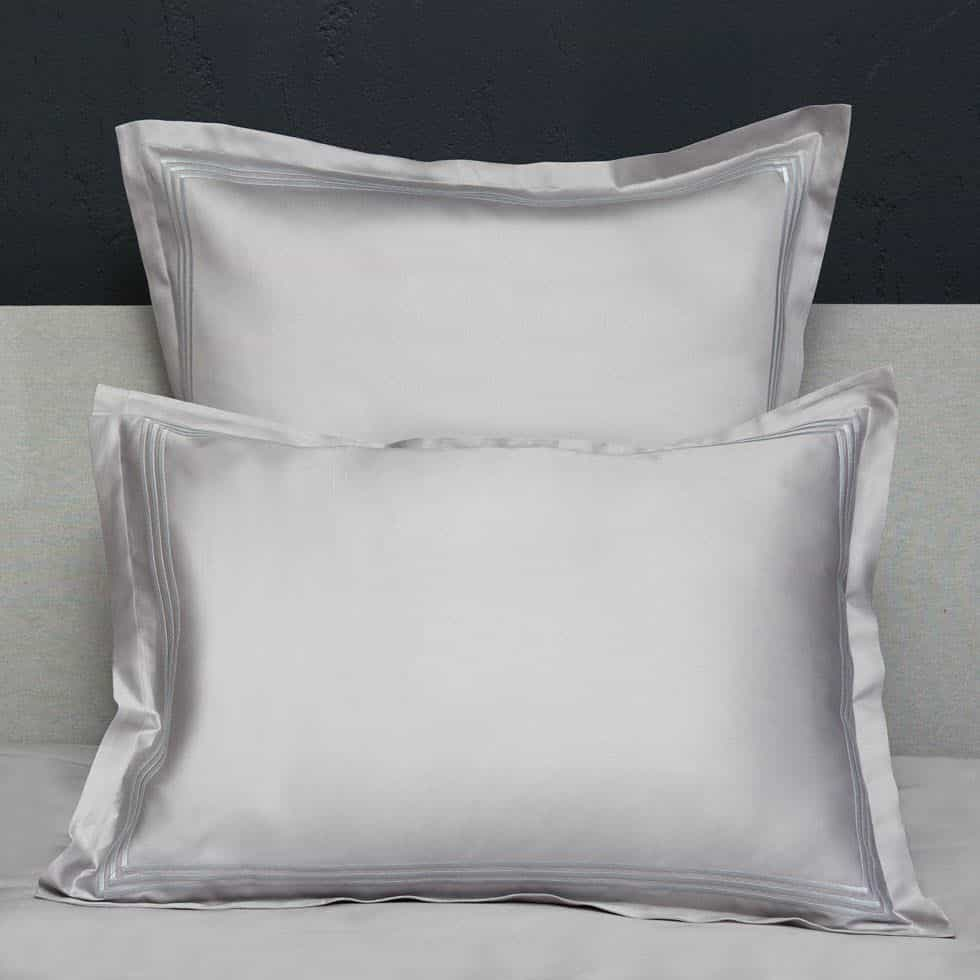
Construction deserves a quiet inspection. Look for evenly sewn seams, cleanly finished edges, and closures that appear secure. A duvet cover is handled frequently—turned, shaken, washed, and changed—so well-finished seams matter as much as an alluring surface. Decorative stitching can add a refined note, but it should not obscure the basic questions of fit, comfort, and durability.
Closures: the small feature you will notice every week
The closure sits at the foot or opening of a duvet cover, and its practical importance becomes clear whenever laundry day arrives. Buttons, ties, and zippers each secure the opening differently. Your choice depends on how often you change the cover, whether you value a discreet finish, and how much attention you are willing to give the fastening.
Buttons: classic, adjustable, and easy to understand
Buttons provide a familiar closure and can suit both traditional and contemporary bedding. They may be visible as a deliberate detail or hidden beneath a flap for a cleaner finish. Button closures are straightforward to use, though they require a little patience when fastening a larger cover. Over time, a button may loosen or need resewing, so examine its attachment and the surrounding fabric. A placket or fabric overlap can also help keep the opening neatly covered.
Ties: a way to secure the insert at the corners
Interior ties are designed to connect the duvet insert to the cover, reducing the chance that the fill will travel or collect at one end. They are particularly useful when the insert has loops in corresponding positions. Check that ties are placed where your insert can meet them; a well-made tie system is of little use if the insert has no matching attachment points and cannot be secured conveniently.
Some covers combine corner ties with buttons, snaps, or another opening closure. The ties hold the insert in place, while the fastener closes the cover. These are separate functions, and it is worth confirming that both are included if you want them. Tying each corner takes an extra moment during a cover change, but it can make the duvet feel more evenly distributed afterward.
Zippers: discreet and quick to close
A zipper can give a cover a streamlined finish and make closing the opening quick. It is worth checking whether it has a protective fabric guard and whether the slider feels secure rather than flimsy. A rough zipper can catch delicate fabric or bedding during laundering, while a well-finished one can disappear neatly into the seam. As with any closure, construction and placement are more meaningful than the name alone.
Some people find zippers the easiest option; others prefer the simplicity of buttons or the softness of a fabric overlap. Consider your own routine. If you change the cover often, ease of handling matters. If you value a traditional finish and do not mind a slower fastening, buttons may feel more satisfying. There is no universally best duvet cover closure—only the one that balances security, convenience, and the look you want.
Keeping the insert in place
A duvet cover that fits well can still allow its insert to shift if the two pieces are not anchored. Corner ties, loops, or other internal fastening points help align them, especially when the bed is made each morning or the duvet is moved frequently at night. If an insert has loops, confirm that the cover includes ties in compatible positions. If it does not, look for a cover design that can hold the insert securely through its shape and fit.
When dressing the duvet, turn the cover inside out and lay it flat. Attach the insert at the corners first, then work along any additional ties before turning the cover right side out. Shake the duvet gently to distribute the fill, and check that the top corners are fully seated. This small ritual takes less time than repeatedly pulling a wandering insert back into place.
A cover should not be so tight that it compresses the insert or puts constant pressure on the ties. Anchoring is meant to stabilize, not restrain. If the corners repeatedly pull free or the insert bunches between fastenings, revisit the dimensions and attachment layout rather than assuming that more force will solve the problem.
Care instructions are part of the buying decision
Before choosing a duvet cover, read the care label as carefully as the fabric description. Check the recommended water temperature, cycle, detergent, drying method, and ironing guidance. A washable cover is not automatically low-maintenance: a delicate cycle, low-temperature drying, or prompt removal may be required to preserve its texture and fit. Conversely, a fabric that can be machine washed may become easier to live with when its instructions align with your household routine.
Wash the cover according to its own instructions, not simply the directions for the duvet insert. Close buttons or zippers where recommended, turn the cover inside out if the care label advises it, and avoid overloading the machine. Crowding prevents fabrics from moving freely and can make rinsing and drying less effective. Use detergent in an appropriate amount; excess product may leave residue and affect the hand of the cloth.
Drying deserves particular attention. High heat can stress fibers, affect dimensions, or set wrinkles more firmly. If the label permits tumble drying, choose the recommended setting and avoid leaving the cover in the dryer after it is dry. Line drying can help reduce heat exposure, but a cover should be spread evenly so it does not dry in a heavily folded mass. Follow the maker’s directions, since fiber and finish can change what is appropriate.
Regular laundering helps keep bedding fresh, but a cover’s washing schedule depends on use, climate, pets, and personal preference. A top sheet can create a barrier between the sleeper and duvet, while a duvet used directly against the body may need more frequent cleaning. Whatever your routine, a manageable care plan is more likely to be followed consistently.
A considered approach to color and style
Once fit and function are settled, the cover can shape the character of the room. White and soft neutrals create a calm foundation; deeper tones can give the bed a more intimate, grounded presence. Stripes and small-scale patterns bring rhythm without demanding an entirely new palette. Texture can also do the work of pattern: a relaxed linen surface, a crisp cotton weave, or a subtle stitched border adds interest while keeping the composition restrained.
Think about how the duvet cover relates to sheets, pillowcases, and shams. Coordinating every layer can feel polished, but a contrast in weave or tone often brings more depth. A matte cover can be paired with smoother cotton, or a quiet stripe can sit alongside plain pillowcases. The aim is a balance of surfaces rather than a bed that feels like a single uninterrupted block of fabric.
Consider the room’s light as well. A pale neutral may read warm in one space and cool in another, while a dark color can feel dramatic in a bright room and enveloping in a dim one. If possible, view fabric samples in the bedroom at different times of day. The most appealing color is the one that works with the room you actually inhabit, not only with a photograph or a display setting.
A practical checklist before you choose
Before settling on a duvet cover, pause over the details that influence everyday use. A thoughtful choice need not be complicated, but it should account for the insert, the sleeper, and the household routine.
- Fit: Have you checked the insert’s exact dimensions against the cover’s finished measurements?
- Feel: Do you prefer linen’s textured, relaxed hand or cotton’s range of crisp and smooth finishes?
- Season: Does the fabric’s weight and surface suit the insert and your usual sleeping temperature?
- Closure: Will buttons, ties, or a zipper make changing and securing the cover easy for you?
- Construction: Are the seams, edges, and fastening points finished to withstand regular handling?
- Care: Can you comfortably follow the washing and drying instructions?
- Style: Does the color, texture, and pattern work with the other layers in your bedroom?
Common duvet cover mistakes to avoid
The most frequent misstep is choosing by bed size alone. A familiar label may not guarantee that a cover and insert have matching dimensions, and the difference can show up as empty corners or compressed fill. Take measurements before you buy and keep a note of them for future purchases.
Another is treating thread count as a complete measure of fabric quality. Thread count describes one aspect of a woven cloth, but fiber length, yarn quality, weave, finishing, and construction also shape performance. A high number does not automatically mean a cover will be cooler, softer, or longer-lasting. Consider the fabric as a whole.
It is also easy to overlook the care label because a cover feels appealing in the store or online. Yet an elaborate maintenance routine can become frustrating when the item is used every night. Choose with the washing instructions in mind, and be realistic about the time and equipment available to you.
Finally, do not assume every closure solves every problem. Buttons and zippers close the opening; ties anchor the insert. Some designs offer both, but many do not. Check the construction description so you know exactly how the duvet is intended to stay in place.
The final measure: how it lives on the bed
A beautiful duvet cover earns its place through repeated use. It should fit the insert without awkward excess, feel agreeable against the skin, and be simple enough to launder and change. The right fabric may be crisp cotton, softly lustrous sateen, or breathable linen; the right closure may be a discreet zipper, classic buttons, or a combination of ties and a secure opening.
Begin with measurements, then weigh the sensory and practical details with equal care. When fit, fabric, closure, and maintenance align, the duvet settles smoothly, the bed feels composed, and the daily routine becomes easier. That is the quiet elegance of well-chosen bedding: not a display reserved for special occasions, but a considered comfort that holds up night after night.